Laser is generated by a laser generator through high‑voltage discharge to excite high‑concentration CO₂ gas, producing laser with 10.6 μm wavelength. The laser irradiates material surfaces to meet production process requirements.
All discharge tubes inside our laser tubes adopt imported discharge tubes, which guarantee internal consistency and concentricity. This prevents deformation of the discharge tube caused by temperature variation during operation, so as to avoid spot mode shift and power attenuation of the laser tube.
Application Scope
Cutting & engraving non‑metallic materials, scientific research, education, garment processing, advertising industry, laser marking.
Working Characteristics
Laser processing utilises light energy focused by lenses to achieve extremely high energy density at the focal point, and processes materials via photothermal effect.
‑ Laser processing requires no physical tools, features fast processing speed and minor surface deformation for various materials. It supports multiple operations such as drilling, cutting, scribing, welding and heat treatment.
‑ Non‑contact processing brings no direct mechanical impact on work‑pieces, resulting in zero mechanical deformation. Both laser‑beam energy and moving speed are adjustable to realise diverse processing purposes.
‑ High‑energy‑density laser beam enables fast localised processing. Non‑irradiated areas receive minimal or no influence, leading to small heat‑affected zone, low thermal deformation of work‑pieces and little follow‑up machining workload.
Warranty Coverage
Warranty applies under the following conditions (after our after‑sales team verifies the fault):
- Laser tube power drops below 70 % of the factory‑rated output.
- The laser tube appears no‑ignition or arcing when excited by matched laser power supply, while appearance remains intact and wiring / interface insulation is properly handled.
- The laser tube can ignite normally, yet abnormal colour (white / purple) appears inside the discharge tube accompanied by obvious power drop.
- Transport‑induced damage found upon customer’s receipt of the laser tube.
Excluded from Warranty
‑ Laser tube is out of warranty period.
‑ Improper installation: laser tube is glassware; damage caused by collision during installation.
‑ Tube burst caused by incomplete air‑bubble removal from water‑cooling layer or excessive cooling‑water temperature difference. Note: water outlet of laser tube shall point vertically upward to fully fill cooling‑jacket without air bubbles.
‑ Damage to output‑window coating due to contaminated lens or incorrect wiping method; lens crack caused by condensation from large temperature gap between cooling water and ambient air.
‑ Tube burst, abnormal spot or unstable power caused by contaminated / blocked water‑cooling jacket from long‑term unchanged cooling water with dirt.
‑ Laser tube failure due to external impact damaging anode / cathode terminals on both ends.
‑ Laser tube rupture caused by human factors, external force, transportation, climate or cooling‑water shortage.
‑ Exceeding specified operating current, resulting in blackened electrodes, power drop and abnormal spot.
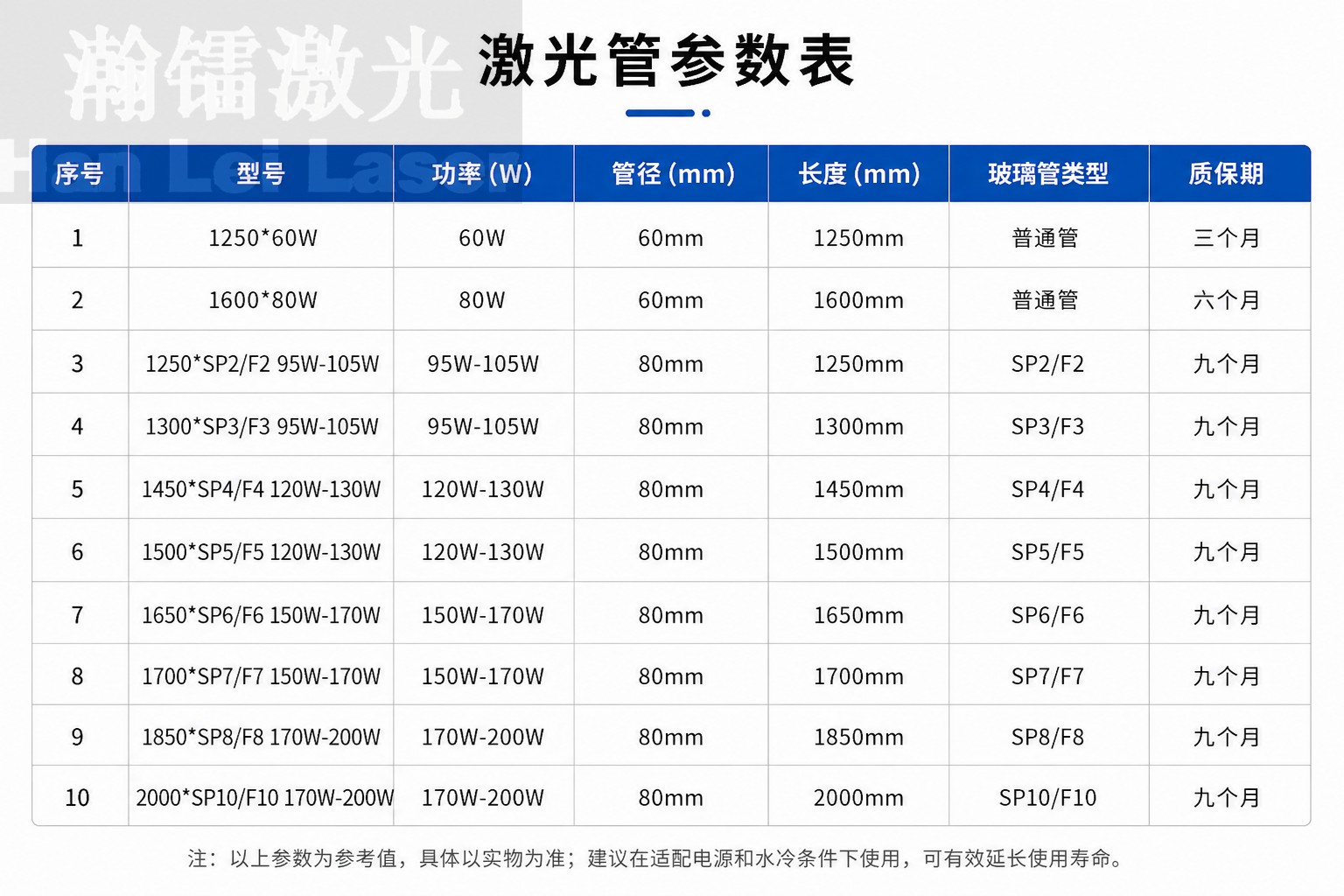
Recommended operating‑current reference:30W‑50W: 12‑18 mA60W‑120W: 15‑22 mA130W‑180W: 18‑26 mA / 24‑30 mA
Common Troubleshooting
Cutting Speed or Engraving Depth Insufficient after New Laser‑Tube Replacement
- Re‑check optical path after tube replacement; offset optical path will reduce cutting speed and engraving depth.
- Inspect 3‑reflector mirrors and focusing lens. Oxidised reflectors cause low reflectivity and hot mirrors, which can be observed visually or by touching mirror backside. Check whether focused spot is centred on nozzle. Misaligned spot reduces laser output; you may feel heat on laser barrel after short‑time running for quick inspection.
- Verify focal‑length setting. A good focusing lens produces hair‑thin focused spot. Thick spot indicates incorrect focal‑point position and degrades cutting & engraving performance.
- If performance degrades after a period of normal operation, inspect cooling system: check whether water temperature is over‑high and water flow rate is sufficient.
High‑Voltage Arcing / Discharge
- Keep high‑voltage electrode area dust‑free and dry during operation. Keep high‑voltage terminals far away from metal components to prevent arcing discharge.
- Prevent limescale accumulation inside water‑cooling tubes to avoid pipeline blockage and poor heat dissipation. Clean cooling pipes with 20 % dilute hydrochloric acid once limescale appears. Unremoved limescale will cause localised high‑voltage breakdown on discharge tube.
Daily Operation Notes
- Ensure water‑protection interlock is enabled. Start cooling‑water circulation first, follow rule: water‑in at lower port, water‑out at upper port. Eliminate all air bubbles before operating laser tube.
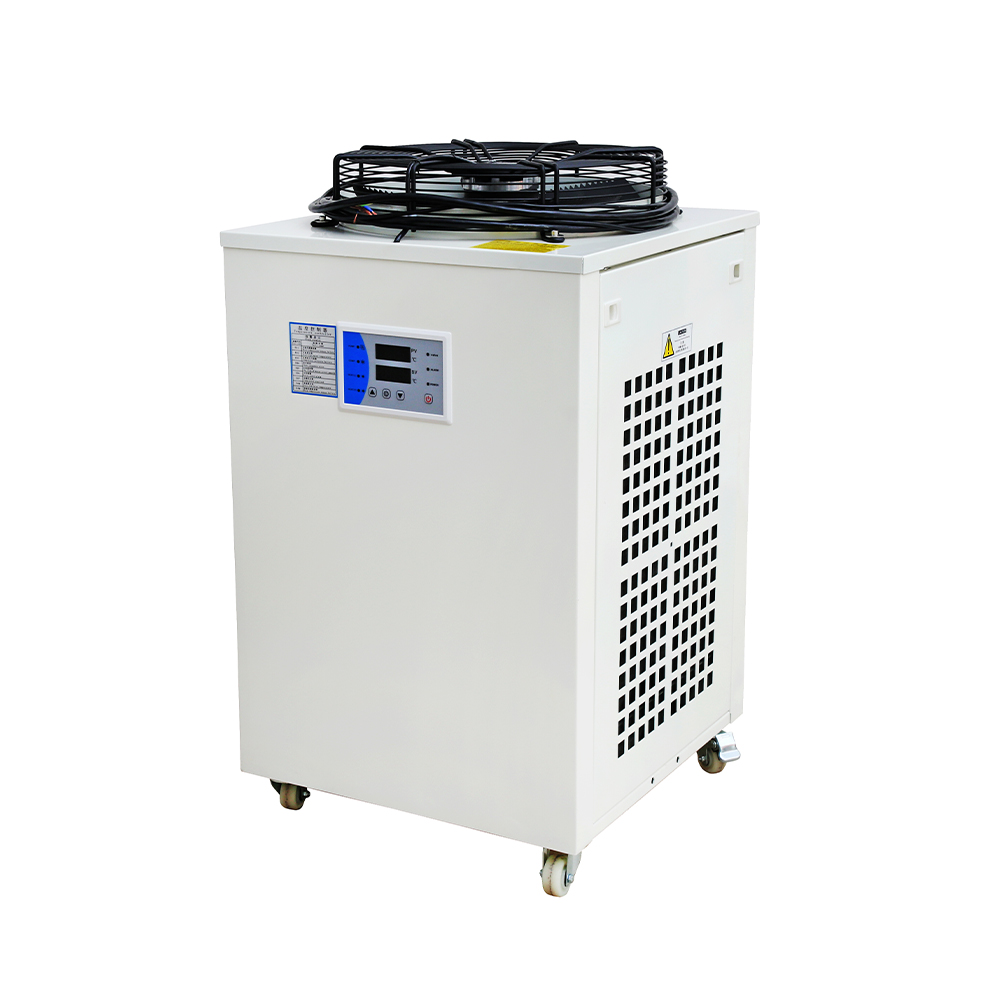
Note: Filtered pure water or distilled water is recommended for cooling water. Tap‑water contains impurities and easily forms limescale under working heat. We strongly recommend using an industrial water chiller, which guarantees stable water flow and cooling‑water temperature, thus stabilising laser‑tube power output.
- Mount laser tube strictly on manufacturer‑recommended support points.
- Protect laser output window from smoke splashes during operation and optical‑path adjustment. Contaminated output window reduces power. Gently wipe window surface with absorbent cotton / silk cloth dipped in anhydrous alcohol for cleaning.
- Operate within maximum allowable current. Rational use greatly extends laser‑tube service life and lowers operating cost.